• WgG2867-77
    RNZAF
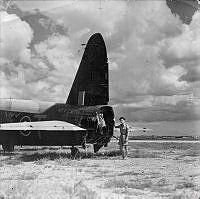
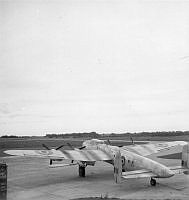
    No. 42 Squadron Dakota NZ3551 being marshalled to a stop on it's final visit to RNZAF Base Wigram. This aircraft was subsequently added to the collection of the Air Force Museum of New Zealand.
    RNZAF
    Wigram
    Dakota
    No. 42 Squadron
    42 Sqn
    NZ3551
    Air Force Museum of New Zealand
  • 1986-016.4.54
    Air Force Museum of New Zealand
    Image from the David Andrew Dunn personal collection. Headquarters building at RNZAF Station Gisborne. Associated document describes: "Headquarters, RNZAF Gisborne located in front of the racecourse grandstand."
    Air Force Museum of New Zealand
    Dunn
    Gisborne
    HQ
    Headquarters
    RNZAF
    WW2
    World War Two
  • 1986-016.5.82
    Air Force Museum of New Zealand
    Image from the David Andrew Dunn personal collection. Aerial oblique view of Mt Ruapehu erupting. Associated document describes: "These two photographs by Sergeant Dave Dunn were taken from an RNZAF Lodestar aircraft looking into the crater of erupting Mt. Ruapehu early Dec 1945. Some of the other passengers on board the aircraft were S/Ldr Al Partelow, S/Ldr Jim Simpson and F/Lt Wally Clutterbuck - Deputy Director RNZAF Signals, an Engineer Officer and a Signals Officer respectively. The passengers were en route from Wellington for assembly at Whenuapai of a party to proceed to Western Samoa for the installation of radio and other equipment at Faleolo airstrip."
    RNZAF
    Dunn
    Air Force Museum of New Zealand
    oblique
    Mt. Ruapehu
    volcano
  • 1986-016.5.83
    Air Force Museum of New Zealand
    Image from the David Andrew Dunn personal collection. Aerial oblique view of Mt Ruapehu erupting. Associated document describes: "These two photographs by Sergeant Dave Dunn were taken from an RNZAF Lodestar aircraft looking into the crater of erupting Mt. Ruapehu early Dec 1945. Some of the other passengers on board the aircraft were S/Ldr Al Partelow, S/Ldr Jim Simpson and F/Lt Wally Clutterbuck - Deputy Director RNZAF Signals, an Engineer Officer and a Signals Officer respectively. The passengers were en route from Wellington for assembly at Whenuapai of a party to proceed to Western Samoa for the installation of radio and other equipment at Faleolo airstrip."
    Air Force Museum of New Zealand
    Dunn
    RNZAF
    oblique
    Mt. Ruapehu
    volcano
  • 1986-016.5.84
    Air Force Museum of New Zealand
    Image from the David Andrew Dunn personal collection. US Navy Grumman Duck at Faleolo airfield, Western Samoa. Associated document describes: " RNZAF Faleolo (Western Samoa). This US Navy amphibian aircraft arrived unannounced at Faleolo and did not answer radio calls on the command frequency. He made a perfect approach and landing on his keel despite the firing from the airstrip during his final approach of a red verry flare to warn of his still retracted undercarriage."
    Air Force Museum of New Zealand
    RNZAF
    Dunn
    Western Samoa
    Faleolo
    Navy
    USN
    Duck
    accident
  • 1986-016.5.85
    Air Force Museum of New Zealand
    Image from the David Andrew Dunn personal collection. US Navy Grumman Duck at Faleolo airfield, Western Samoa. Associated document describes: " RNZAF Faleolo (Western Samoa). This US Navy amphibian aircraft arrived unannounced at Faleolo and did not answer radio calls on the command frequency. He made a perfect approach and landing on his keel despite the firing from the airstrip during his final approach of a red verry flare to warn of his still retracted undercarriage."
    Dunn
    RNZAF
    Air Force Museum of New Zealand
    Western Samoa
    Faleolo
    Navy
    USN
    Duck
    accident
  • 1986-016.5.86
    Air Force Museum of New Zealand
    Image from the David Andrew Dunn personal collection. RAF York LV633 taxiing at RNZAF Station Ohakea.
    Air Force Museum of New Zealand
    RNZAF
    Dunn
    RAF
    York
    LV633
    Ohakea
  • 1986-016.10.60
    Air Force Museum of New Zealand
    Image from the David Andrew Dunn personal collection. 3/4 front view of GMC truck MT3233 with a Direction Finding cab on the back, on the airfield at RNZAF Station Ohakea. Associated document describes: "The VHF D/F station at Ohakea located adjacent to the beam approach unit at the eastern end of Ohakea's main runway, photographed from various angles. The beam approach unit can be seen in No. 66 [1986-016.10.66] near the right hand upper edge of the photograph. The trailer seen in No.s 63, 64 & 65 [1986-016.10.63, 1986-016.10.64 & 1986-016.10.65] contained our AC generator. Although the equipment in the van was battery operated, an auxiliary source of mains power was required to keep the batteries charged. Mains power was laid on from Ohakea station for this installation and the trailer regarded as an emergency source. The D/F antenna system comprised a pair of vertical phased dipoles backed by another pair of dipoles which could be switched to distort the normal figure-of-eight polar pattern for sense determination. The whole antenna system was rotated from inside the van. The installation was installed primarily for use by fighter aircraft with VHF facilities whose pilots required bearings for homing (QDM's). However, multi-engined aircraft also sometimes utilised the VHF D/F facility with requests for QTEs. The equipment provided a high degree of accuracy, and operators were able to obtain extremely well defined bearings. So far as is known, the RNZAF had two of these units in operation - one at Ohakea, the other at Ardmore."
    Air Force Museum of New Zealand
    RNZAF
    WW2
    World War Two
    Dunn
    Ohakea
    Mechanical Transport
    MT
    GMC
    MT3233
  • 1986-016.10.61
    Air Force Museum of New Zealand
    Image from the David Andrew Dunn personal collection. 3/4 front view of GMC truck MT3233 with a Direction Finding cab on the back, on the airfield at RNZAF Station Ohakea. Associated document describes: "The VHF D/F station at Ohakea located adjacent to the beam approach unit at the eastern end of Ohakea's main runway, photographed from various angles. The beam approach unit can be seen in No. 66 [1986-016.10.66] near the right hand upper edge of the photograph. The trailer seen in No.s 63, 64 & 65 [1986-016.10.63, 1986-016.10.64 & 1986-016.10.65] contained our AC generator. Although the equipment in the van was battery operated, an auxiliary source of mains power was required to keep the batteries charged. Mains power was laid on from Ohakea station for this installation and the trailer regarded as an emergency source. The D/F antenna system comprised a pair of vertical phased dipoles backed by another pair of dipoles which could be switched to distort the normal figure-of-eight polar pattern for sense determination. The whole antenna system was rotated from inside the van. The installation was installed primarily for use by fighter aircraft with VHF facilities whose pilots required bearings for homing (QDM's). However, multi-engined aircraft also sometimes utilised the VHF D/F facility with requests for QTEs. The equipment provided a high degree of accuracy, and operators were able to obtain extremely well defined bearings. So far as is known, the RNZAF had two of these units in operation - one at Ohakea, the other at Ardmore."
    Ohakea
    Air Force Museum of New Zealand
    WW2
    World War Two
    RNZAF
    Dunn
    Mechanical Transport
    MT
    GMC
    MT3233
  • 1986-016.10.62
    Air Force Museum of New Zealand
    Image from the David Andrew Dunn personal collection. 3/4 front view of GMC truck MT3233 with a Direction Finding cab on the back, on the airfield at RNZAF Station Ohakea. Associated document describes: "The VHF D/F station at Ohakea located adjacent to the beam approach unit at the eastern end of Ohakea's main runway, photographed from various angles. The beam approach unit can be seen in No. 66 [1986-016.10.66] near the right hand upper edge of the photograph. The trailer seen in No.s 63, 64 & 65 [1986-016.10.63, 1986-016.10.64 & 1986-016.10.65] contained our AC generator. Although the equipment in the van was battery operated, an auxiliary source of mains power was required to keep the batteries charged. Mains power was laid on from Ohakea station for this installation and the trailer regarded as an emergency source. The D/F antenna system comprised a pair of vertical phased dipoles backed by another pair of dipoles which could be switched to distort the normal figure-of-eight polar pattern for sense determination. The whole antenna system was rotated from inside the van. The installation was installed primarily for use by fighter aircraft with VHF facilities whose pilots required bearings for homing (QDM's). However, multi-engined aircraft also sometimes utilised the VHF D/F facility with requests for QTEs. The equipment provided a high degree of accuracy, and operators were able to obtain extremely well defined bearings. So far as is known, the RNZAF had two of these units in operation - one at Ohakea, the other at Ardmore."
    Ohakea
    Air Force Museum of New Zealand
    WW2
    World War Two
    RNZAF
    Dunn
    Mechanical Transport
    MT
    GMC
    MT3233
  • 1986-016.10.63
    Air Force Museum of New Zealand
    Image from the David Andrew Dunn personal collection. 3/4 front view of GMC truck MT3233 with a Direction Finding cab on the back, on the airfield at RNZAF Station Ohakea. Associated document describes: "The VHF D/F station at Ohakea located adjacent to the beam approach unit at the eastern end of Ohakea's main runway, photographed from various angles. The beam approach unit can be seen in No. 66 [1986-016.10.66] near the right hand upper edge of the photograph. The trailer seen in No.s 63, 64 & 65 [1986-016.10.63, 1986-016.10.64 & 1986-016.10.65] contained our AC generator. Although the equipment in the van was battery operated, an auxiliary source of mains power was required to keep the batteries charged. Mains power was laid on from Ohakea station for this installation and the trailer regarded as an emergency source. The D/F antenna system comprised a pair of vertical phased dipoles backed by another pair of dipoles which could be switched to distort the normal figure-of-eight polar pattern for sense determination. The whole antenna system was rotated from inside the van. The installation was installed primarily for use by fighter aircraft with VHF facilities whose pilots required bearings for homing (QDM's). However, multi-engined aircraft also sometimes utilised the VHF D/F facility with requests for QTEs. The equipment provided a high degree of accuracy, and operators were able to obtain extremely well defined bearings. So far as is known, the RNZAF had two of these units in operation - one at Ohakea, the other at Ardmore."
    Ohakea
    Air Force Museum of New Zealand
    WW2
    World War Two
    RNZAF
    Dunn
    Mechanical Transport
    MT
    GMC
    MT3233
  • 1986-016.10.64
    Air Force Museum of New Zealand
    Image from the David Andrew Dunn personal collection. 3/4 front view of GMC truck MT3233 with a Direction Finding cab on the back, on the airfield at RNZAF Station Ohakea. Associated document describes: "The VHF D/F station at Ohakea located adjacent to the beam approach unit at the eastern end of Ohakea's main runway, photographed from various angles. The beam approach unit can be seen in No. 66 [1986-016.10.66] near the right hand upper edge of the photograph. The trailer seen in No.s 63, 64 & 65 [1986-016.10.63, 1986-016.10.64 & 1986-016.10.65] contained our AC generator. Although the equipment in the van was battery operated, an auxiliary source of mains power was required to keep the batteries charged. Mains power was laid on from Ohakea station for this installation and the trailer regarded as an emergency source. The D/F antenna system comprised a pair of vertical phased dipoles backed by another pair of dipoles which could be switched to distort the normal figure-of-eight polar pattern for sense determination. The whole antenna system was rotated from inside the van. The installation was installed primarily for use by fighter aircraft with VHF facilities whose pilots required bearings for homing (QDM's). However, multi-engined aircraft also sometimes utilised the VHF D/F facility with requests for QTEs. The equipment provided a high degree of accuracy, and operators were able to obtain extremely well defined bearings. So far as is known, the RNZAF had two of these units in operation - one at Ohakea, the other at Ardmore."
    Ohakea
    Air Force Museum of New Zealand
    WW2
    World War Two
    RNZAF
    Dunn
    Mechanical Transport
    MT
    GMC
    MT3233
  • 1986-016.10.65
    Air Force Museum of New Zealand
    Image from the David Andrew Dunn personal collection. 3/4 front view of GMC truck MT3233 with a Direction Finding cab on the back, on the airfield at RNZAF Station Ohakea. Associated document describes: "The VHF D/F station at Ohakea located adjacent to the beam approach unit at the eastern end of Ohakea's main runway, photographed from various angles. The beam approach unit can be seen in No. 66 [1986-016.10.66] near the right hand upper edge of the photograph. The trailer seen in No.s 63, 64 & 65 [1986-016.10.63, 1986-016.10.64 & 1986-016.10.65] contained our AC generator. Although the equipment in the van was battery operated, an auxiliary source of mains power was required to keep the batteries charged. Mains power was laid on from Ohakea station for this installation and the trailer regarded as an emergency source. The D/F antenna system comprised a pair of vertical phased dipoles backed by another pair of dipoles which could be switched to distort the normal figure-of-eight polar pattern for sense determination. The whole antenna system was rotated from inside the van. The installation was installed primarily for use by fighter aircraft with VHF facilities whose pilots required bearings for homing (QDM's). However, multi-engined aircraft also sometimes utilised the VHF D/F facility with requests for QTEs. The equipment provided a high degree of accuracy, and operators were able to obtain extremely well defined bearings. So far as is known, the RNZAF had two of these units in operation - one at Ohakea, the other at Ardmore."
    Ohakea
    Air Force Museum of New Zealand
    WW2
    World War Two
    RNZAF
    Dunn
    Mechanical Transport
    MT
    GMC
    MT3233
  • 1986-016.10.66
    Air Force Museum of New Zealand
    Image from the David Andrew Dunn personal collection. 3/4 front view of GMC truck MT3233 with a Direction Finding cab on the back, on the airfield at RNZAF Station Ohakea. Associated document describes: "The VHF D/F station at Ohakea located adjacent to the beam approach unit at the eastern end of Ohakea's main runway, photographed from various angles. The beam approach unit can be seen in No. 66 [1986-016.10.66] near the right hand upper edge of the photograph. The trailer seen in No.s 63, 64 & 65 [1986-016.10.63, 1986-016.10.64 & 1986-016.10.65] contained our AC generator. Although the equipment in the van was battery operated, an auxiliary source of mains power was required to keep the batteries charged. Mains power was laid on from Ohakea station for this installation and the trailer regarded as an emergency source. The D/F antenna system comprised a pair of vertical phased dipoles backed by another pair of dipoles which could be switched to distort the normal figure-of-eight polar pattern for sense determination. The whole antenna system was rotated from inside the van. The installation was installed primarily for use by fighter aircraft with VHF facilities whose pilots required bearings for homing (QDM's). However, multi-engined aircraft also sometimes utilised the VHF D/F facility with requests for QTEs. The equipment provided a high degree of accuracy, and operators were able to obtain extremely well defined bearings. So far as is known, the RNZAF had two of these units in operation - one at Ohakea, the other at Ardmore."
    Ohakea
    Air Force Museum of New Zealand
    WW2
    World War Two
    RNZAF
    Dunn
    Mechanical Transport
    MT
    GMC
    MT3233
  • 1986-016.10.67
    Air Force Museum of New Zealand
    Image from the David Andrew Dunn personal collection. Interior view of instruments in the Direction Finding truck, MT3233, at RNZAF Station Ohakea. Associated document describes: "Interior view of the VHF D/F van looking towards the rear. The cone from the ceiling supports the bottom of the antenna system shaft rotated by the handwheel. Downward pressure on the disc immediately above the handwheel operated the switches at the centre of the "back' dipoles for sense determination. The dual scales with cursor next above the sense disc provided bearing information. The top scale provided direct read out of QTEs, and the bottom scale direct read out of QDMs. The meter above the scales is a signal strength meter which was particularly useful for sense determination. No correction charts were used. The dual receivers and other auxiliary equipment are seen in racks above the operator's desk on the right. The batteries are contained in the area provided by the raised section of the floor visible to the left of the operator's desk. Immediately above the battery box against the rear wall is the battery switching panel, and above that, the battery charger. A high capacity kerosene heater and blower for the operator's comfort is located in the corner of the van to the left and just out of the photograph." See also 1986-016.10.68 & 1986-016.10.69.
    Ohakea
    Air Force Museum of New Zealand
    WW2
    World War Two
    RNZAF
    Dunn
    Mechanical Transport
    MT
    GMC
    MT3233
  • 1986-016.10.68
    Air Force Museum of New Zealand
    Image from the David Andrew Dunn personal collection. Interior view of instruments in the Direction Finding truck, MT3233, at RNZAF Station Ohakea. Associated document describes: " The rack panels above the operator's desk seen in No. 67 [1986-016.10.67]. To the left of the microphone are the dual turnable VHF receivers, above which are the dual power supply units, and above them a crystal calibrator by which receiver tuning could be checked. The panels on the right were intended for remote transmitter control and line communications with outside units. One of the telephones was a direct line to Ohakea's control tower, the other a line to the Ohakea exchange. The omnidirectional listening watch was actually maintained via a crystal controlled receiver at Ohakea's receiving station, the output of which was piped along lines to the D/F van. Similarly, output from the D/F van's microphone speech amplifier was piped to Ohakea's transmitter station to operate a transmitter there. Standby battery operated transceiver equipment for emergency communications was included in the van, for which the control box can be seen to the lower extreme right of photograph No. 67 [1986-016.10.67]." See also 1986-016.10.67 & 1986-016.10.69.
    Ohakea
    Air Force Museum of New Zealand
    WW2
    World War Two
    RNZAF
    Dunn
    Mechanical Transport
    MT
    GMC
    MT3233
  • 1986-016.10.69
    Air Force Museum of New Zealand
    Image from the David Andrew Dunn personal collection. Interior view of instruments in the Direction Finding truck, MT3233, at RNZAF Station Ohakea. Associated document describes: "The receiver rack panel and antenna control assembly is more clearly illustrated in this photograph. Note the rod antenna fixed to the output of the crystal calibrator - the test unit in the rack." See also 1986-016.10.67 & 1986-016.10.68.
    Ohakea
    Air Force Museum of New Zealand
    WW2
    World War Two
    RNZAF
    Dunn
    Mechanical Transport
    MT
    GMC
    MT3233
  • 1986-016.10.70
    Air Force Museum of New Zealand
    Image from the David Andrew Dunn personal collection. Airfield with cows and a column of smoke from an aircraft crash at RNZAF Station Ohakea. Associated document describes: "Aircraft crash seen from VHF D/F unit. Other details not remembered."
    Dunn
    RNZAF
    World War Two
    WW2
    Air Force Museum of New Zealand
    Ohakea
  • 1986-016.10.71
    Air Force Museum of New Zealand
    Image from the David Andrew Dunn personal collection. Direction Finding hut at RNZAF Station Ohakea. Associated document describes: "H/F D/F installation at Ohakea. The Adcock type antenna system is clearly seen. The equipment inside the hut was Marconi type DFG12 which comprised a high performance receiver and a D/F panel with radiogoniometer etc. H/F D/F installations has a much greater range of operation that the M/F D/F, and the Ohakea installation generally provided QTEs for aircraft en route between NZ and the Pacific islands. With bearings from other H/F D/F stations at other locations, position fixes were frequently possible."
    Dunn
    RNZAF
    World War Two
    WW2
    Air Force Museum of New Zealand
    Ohakea
  • 1986-016.10.72
    Air Force Museum of New Zealand
    Image from the David Andrew Dunn personal collection. Direction Finding hut at RNZAF Station Ohakea. Associated document describes: "H/F D/F installation at Ohakea. The Adcock type antenna system is clearly seen. The equipment inside the hut was Marconi type DFG12 which comprised a high performance receiver and a D/F panel with radiogoniometer etc. H/F D/F installations has a much greater range of operation that the M/F D/F, and the Ohakea installation generally provided QTEs for aircraft en route between NZ and the Pacific islands. With bearings from other H/F D/F stations at other locations, position fixes were frequently possible."
    Dunn
    RNZAF
    World War Two
    WW2
    Air Force Museum of New Zealand
    Ohakea
  • 1986-016.10.73
    Air Force Museum of New Zealand
    Image from the David Andrew Dunn personal collection. Personnel in a Ford truck at RNZAF Station Ohakea. Associated document describes: "Taken at Ohakea. Sergeant Jack Peacock and Corporal Crawford McBride (inside the cab) who installed the H/F D/F systems first at Norfolk (1944), and then at Ohakea (1945). Aircraftman Snow Hallett outside the cab - an operator at the VHF D/F station at the time."
    Dunn
    RNZAF
    World War Two
    WW2
    Air Force Museum of New Zealand
    Ohakea
    Peacock
    McBride
    Hallett
  • 1986-016.4.53
    Air Force Museum of New Zealand
    Image from the David Andrew Dunn personal collection. Headquarters building at RNZAF Station Gisborne. Associated document describes: "Headquarters, RNZAF Gisborne located in front of the racecourse grandstand."
    Air Force Museum of New Zealand
    Dunn
    Gisborne
    RNZAF
    WW2
    World War Two
    Headquarters
    HQ
  • 1986-016.4.55
    Air Force Museum of New Zealand
    Image from the David Andrew Dunn personal collection. Direction finding installation at RNZAF Station Gisborne. Associated document describes: "Medium frequency direction finding station located near [the] southern boundary of Gisborne airfield. This D/F station (and some others) used an antenna system comprising two large open single wire triangular shaped loops mounted on poles at right angles to each other. D/F stations similar to this one were constructed and operated by the NZ Post Office prior to 1939 near most of the major NZ airports primarily to provide communications and navigational facilities to civil aviation aircraft (e.g. Union Airways). The stations were also linked by a point to point radio network for the exchange of weather information, arrival and departure times of aircraft etc., and were the original "Aeradio" stations. The RNZAF took most of the stations and many of the operators over at the beginning of WWII."
    Dunn
    RNZAF
    World War Two
    WW2
    Air Force Museum of New Zealand
    Gisborne
  • 1986-016.4.56
    Air Force Museum of New Zealand
    Image from the David Andrew Dunn personal collection. Direction finding installation at RNZAF Station Gisborne. Associated document describes: "Medium frequency direction finding station located near [the] southern boundary of Gisborne airfield. This D/F station (and some others) used an antenna system comprising two large open single wire triangular shaped loops mounted on poles at right angles to each other. D/F stations similar to this one were constructed and operated by the NZ Post Office prior to 1939 near most of the major NZ airports primarily to provide communications and navigational facilities to civil aviation aircraft (e.g. Union Airways). The stations were also linked by a point to point radio network for the exchange of weather information, arrival and departure times of aircraft etc., and were the original "Aeradio" stations. The RNZAF took most of the stations and many of the operators over at the beginning of WWII."
    Air Force Museum of New Zealand
    WW2
    World War Two
    RNZAF
    Dunn
    Gisborne
  • 1986-016.4.40
    Air Force Museum of New Zealand
    Image from the David Andrew Dunn personal collection. Direction finding installation at RNZAF Station Gisborne. Associated document describes: "Medium frequency direction finding station located near [the] southern boundary of Gisborne airfield. This D/F station (and some others) used an antenna system comprising two large open single wire triangular shaped loops mounted on poles at right angles to each other. D/F stations similar to this one were constructed and operated by the NZ Post Office prior to 1939 near most of the major NZ airports primarily to provide communications and navigational facilities to civil aviation aircraft (e.g. Union Airways). The stations were also linked by a point to point radio network for the exchange of weather information, arrival and departure times of aircraft etc., and were the original "Aeradio" stations. The RNZAF took most of the stations and many of the operators over at the beginning of WWII."
    Dunn
    RNZAF
    World War Two
    WW2
    Air Force Museum of New Zealand
    Gisborne