Image from the Shirley Elizabeth Dunn personal collection.
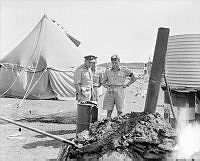
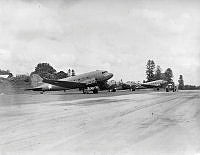
Airfield scene at Norfolk Island. USAAF Dakota 4118578 'Elinor', two No.1 Squadron RNZAF Hudsons, and another USAAF Dakota, with a fire tender in front.
Image from the Thomas Alexander McLeod Morgan personal collection.
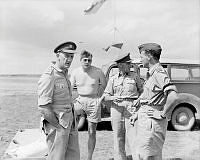
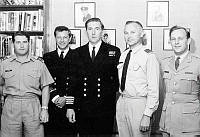
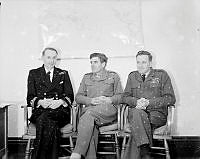
Informal group at the Command and Staff College, Whenuapai, RNZAF Base Auckland.
L-R: Squadron Leader PJ McKay, unknown Lieutenant Commander, Captain Mercer, Wing Commander TAMcL Morgan, Major DS McIver.
Original RNZAF negative number WhG4691-68.
Image from the Richard Duerden personal collection.
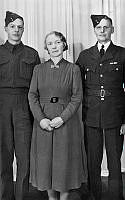
Family group. Corporal (later Warrant Officer) Richard Duerden (right), his wife(?), with their(?) son Clifford (Gunner in the Artillery). Dunedin.
Handwritten on the reverse "Taken on final leave 28/10/40"
Image from the Richard Duerden personal collection.
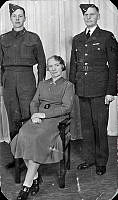
Family group. Corporal (later Warrant Officer) Richard Duerden (right), his wife(?), with their(?) son Clifford (Gunner in the Artillery). Dunedin.
Handwritten on the reverse "Taken on final leave 28/10/40"
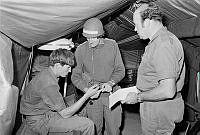
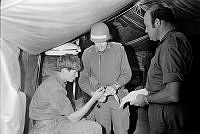
Navy, Army and RNZAF officers. Unknown location.
This PRS series was found without a register or other information. Some detail has been gleaned from some of the negative sleeves or where the picture has been published.
This series post-dates the DM series and pre-dates the post-war PR series (beginning in 1956).
Original negative deteriorating resulting in poor image quality.
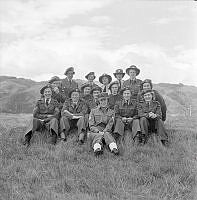
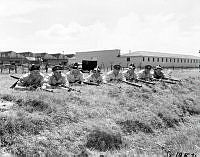
Services shoot. Believed to be at Trentham Military Camp.
Informal group of RNZAF service women and an Army woman Corporal.
This PRS series was found without a register or other information. Some detail has been gleaned from some of the negative sleeves or where the picture has been published.
This series post-dates the DM series and pre-dates the post-war PR series (beginning in 1956).
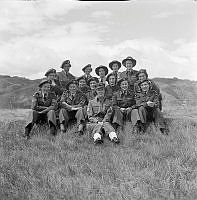
Services shoot. Believed to be at Trentham Military Camp.
Informal group of RNZAF service women and an Army woman Corporal.
This PRS series was found without a register or other information. Some detail has been gleaned from some of the negative sleeves or where the picture has been published.
This series post-dates the DM series and pre-dates the post-war PR series (beginning in 1956).
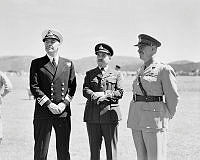
The three Service Chiefs at the Tri-Service shooting competition at Trentham Military Camp.
L-R: Rear Admiral J McBeath CB DSO DSC, Air Vice Marshal WH Merton CB OBE, Major General S Weir CB DSO & Bar.
This PRS series was found without a register or other information. Some detail has been gleaned from some of the negative sleeves or where the picture has been published.
This series post-dates the DM series and pre-dates the post-war PR series (beginning in 1956).
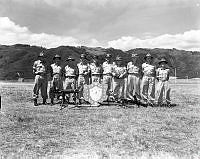
Tri-Service shooting competition at Trentham Military Camp.
Group of soldiers with their weapons and trophy.
This PRS series was found without a register or other information. Some detail has been gleaned from some of the negative sleeves or where the picture has been published.
This series post-dates the DM series and pre-dates the post-war PR series (beginning in 1956).
Original RNZAF negative deteriorated; this file taken from a contact print.
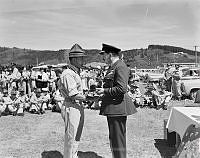
Tri-Service shooting competition at Trentham Military Camp.
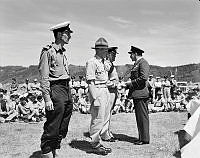
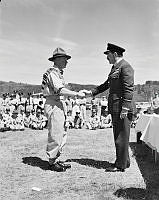
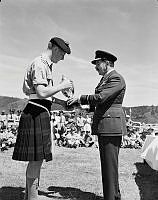
The Chief of Air Staff, Air Vice Marshal WH Merton CB OBE, presenting a trophy to a Soldier.
This PRS series was found without a register or other information. Some detail has been gleaned from some of the negative sleeves or where the picture has been published.
This series post-dates the DM series and pre-dates the post-war PR series (beginning in 1956).
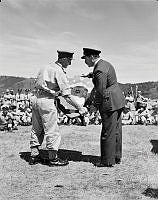
Tri-Service shooting competition at Trentham Military Camp.
The Chief of Air Staff, Air Vice Marshal WH Merton CB OBE, presenting a trophy to a Soldier.
This PRS series was found without a register or other information. Some detail has been gleaned from some of the negative sleeves or where the picture has been published.
This series post-dates the DM series and pre-dates the post-war PR series (beginning in 1956).
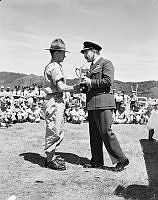
Tri-Service shooting competition at Trentham Military Camp.
The Chief of Air Staff, Air Vice Marshal WH Merton CB OBE, presenting a trophy to a Soldier.
This PRS series was found without a register or other information. Some detail has been gleaned from some of the negative sleeves or where the picture has been published.
This series post-dates the DM series and pre-dates the post-war PR series (beginning in 1956).
Tri-Service shooting competition at Trentham Military Camp.
The Chief of Air Staff, Air Vice Marshal WH Merton CB OBE, congratulating a winning airman.
This PRS series was found without a register or other information. Some detail has been gleaned from some of the negative sleeves or where the picture has been published.
This series post-dates the DM series and pre-dates the post-war PR series (beginning in 1956).
Tri-Service shooting competition at Trentham Military Camp.
The Chief of Air Staff, Air Vice Marshal WH Merton CB OBE, presenting a trophy to a Soldier.
This PRS series was found without a register or other information. Some detail has been gleaned from some of the negative sleeves or where the picture has been published.
This series post-dates the DM series and pre-dates the post-war PR series (beginning in 1956).
Tri-Service shooting competition at Trentham Military Camp.
The Chief of Air Staff, Air Vice Marshal WH Merton CB OBE, presenting a trophy to a Soldier.
This PRS series was found without a register or other information. Some detail has been gleaned from some of the negative sleeves or where the picture has been published.
This series post-dates the DM series and pre-dates the post-war PR series (beginning in 1956).
Tri-Service shooting competition at Trentham Military Camp.
Soldiers on the firing mound for the rifle shoot.
This PRS series was found without a register or other information. Some detail has been gleaned from some of the negative sleeves or where the picture has been published.
This series post-dates the DM series and pre-dates the post-war PR series (beginning in 1956).
Original RNZAF negative deteriorated; this file taken from a contact print.
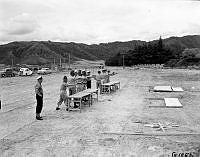
Tri-Service shooting competition at Trentham Military Camp.
Service men on the pistol shoot line.
This PRS series was found without a register or other information. Some detail has been gleaned from some of the negative sleeves or where the picture has been published.
This series post-dates the DM series and pre-dates the post-war PR series (beginning in 1956).
Original RNZAF negative deteriorated; this file taken from a contact print.
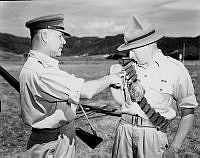
Tri-Service shooting competition at Trentham Military Camp.
Army Captain looking at a shooting trophy worn by a soldier.
This PRS series was found without a register or other information. Some detail has been gleaned from some of the negative sleeves or where the picture has been published.
This series post-dates the DM series and pre-dates the post-war PR series (beginning in 1956).Original RNZAF negative deteriorated; this file taken from a contact print.
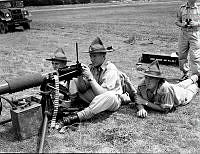
Tri-Service shooting competition at Trentham Military Camp.
Army Vickers machine gun team on the firing range.
This PRS series was found without a register or other information. Some detail has been gleaned from some of the negative sleeves or where the picture has been published.
This series post-dates the DM series and pre-dates the post-war PR series (beginning in 1956).
Original RNZAF negative deteriorated; this file taken from a contact print.
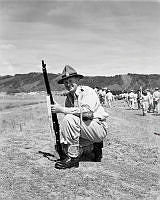
Tri-Service shooting competition at Trentham Military Camp.
Unknown soldier with his rifle on the shooting range.
This PRS series was found without a register or other information. Some detail has been gleaned from some of the negative sleeves or where the picture has been published.
This series post-dates the DM series and pre-dates the post-war PR series (beginning in 1956).
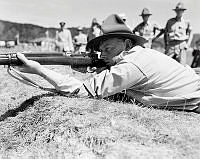
Tri-Service shooting competition at Trentham Military Camp.
Soldier competing in the prone rifle shoot.
This PRS series was found without a register or other information. Some detail has been gleaned from some of the negative sleeves or where the picture has been published.
This series post-dates the DM series and pre-dates the post-war PR series (beginning in 1956).